
-
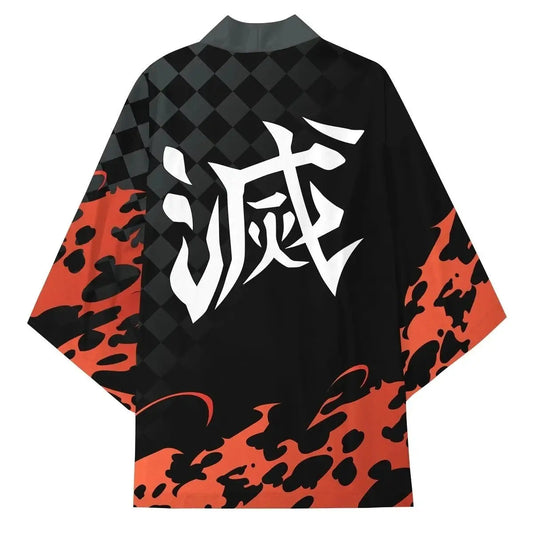
Rengoku Hashira Haori Kimono
Regular price 35$ USDRegular priceUnit price per -
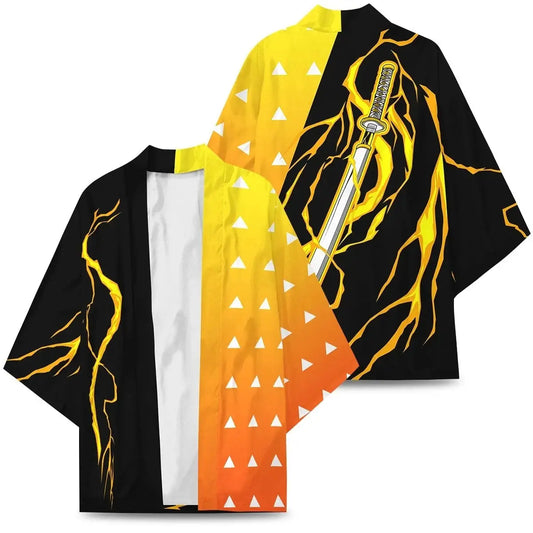
Zenitsu Hashira Haori Kimono
Regular price 35$ USDRegular priceUnit price per -
Inosuke Hashira Haori Kimono
Regular price 35$ USDRegular priceUnit price per -
Giyu Hashira Haori Kimono
Regular price 35$ USDRegular priceUnit price per




Cloaks of the Elite: The Legacy of the Hashira Haori
Each Hashira in the Demon Slayer Corps wears a haori that is more than just fabric—it's a banner of their resolve, their past, and their elemental connection. These haori are not mass-produced nor uniform in design. Instead, each is tailor-made, woven with identity and spirit. From Rengoku's fiery flame print to Shinobu's delicate butterfly wings, every Hashira haori is a visual storytelling piece wrapped in symbolism and strength.
The Hashira Haori Collection represents the pinnacle of anime fashion and character-driven design. These cloaks are revered by fans, not just for their stunning visuals, but for what they represent: courage, individuality, and the burden of ultimate responsibility. Wearing one is stepping into the shoes of a living legend.
What makes these haori extraordinary isn't just the aesthetics—it's the history each piece carries. They're forged in loss, triumph, duty, and heartbreak. These cloaks are not just uniforms, they are emotional relics. The Hashira don't just wear their power—they wear their purpose. To wear a Hashira haori is to carry the weight of demons slain, comrades lost, and justice served. It is to wrap yourself in the spirit of those who stand at the edge of humanity and hold back the darkness.
Whether you're assembling a cosplay lineup, building a tribute wall, or simply celebrating the artistry of Demon Slayer, the haori are must-have icons of the series. Each cloak captures a soul, a journey, a legacy. They are fabric turned into flame, love, storm, mist, and stone.
Threads of Meaning: A Look at Each Hashira Haori
Each Hashira's haori is an extension of their breathing style, personality, and emotional journey. Here's a breakdown of what makes each cloak not just iconic, but deeply meaningful:
| Hashira | Haori Description | Symbolism |
|---|---|---|
| Rengoku | Flame motif in red, orange, and yellow | Passion, courage, burning justice |
| Giyu | Half blue geometric, half solid red | Duality, emotional restraint, water vs. fire |
| Shinobu | Lavender butterfly wings on gradient background | Grace, poison, lightness |
| Gyomei | Olive green with kanji for "Suffer" and "Death" | Sacrifice, spirituality, warrior monk |
| Mitsuri | Pale pink with green lining and heart patterns | Love, emotion, sensitivity |
| Sanemi | Pale gray with jagged tear-like pattern | Wind, rage, unpredictability |
| Muichiro | Ombre of misty green and white | Ephemerality, memory, fog |
| Tengen | Flashy red and gold with musical motifs | Sound, extravagance, rhythm |
| Obanai | Monochrome stripes, snake scale-inspired | Binding, obsession, secrecy |
Each haori is crafted to mirror not just the aesthetic preferences of the Hashira, but the very core of their inner selves. The colors, shapes, and motifs aren't chosen at random — they're reflections of emotional trauma, personal evolution, and symbolic rebirth.
Take Rengoku for example. His flame design isn't just because he uses Flame Breathing; it is also a symbol of his fierce devotion, his burning sense of justice, and his undying optimism. He is the flame that warms and the flame that devours.
Or Giyu, whose half-blue and half-red haori reflects the conflict within him — the guilt, the stoicism, the fire of loss and the calm of acceptance. He wears contradiction, just like he lives it.
Each piece, when worn, becomes more than cosplay. It becomes armor imbued with a story.
Why the Hashira Haori Captivate Fans
1. Deep Character Connection: The haori aren’t just fashion—they’re windows into the Hashira's hearts. Fans wear or display them as expressions of identity and admiration. Each haori feels like a shrine to the character's beliefs, struggles, and evolution.
2. Iconic Visuals: These cloaks are instantly recognizable. Whether flowing through a battle scene or featured in key character moments, their shapes and patterns imprint themselves on the memory. In fact, entire arcs are emotionally tied to these designs. Think of Rengoku’s cloak fluttering in the wind during the Mugen Train finale — it’s a visual memory burned into the hearts of millions.
3. Symbol of Strength and Tragedy: Each haori is associated with immense skill—but also sacrifice. They represent the cost of becoming one of the Corps’ top warriors. When we see them, we remember the battles won… and the prices paid.
4. Fashion Meets Lore: The balance of aesthetic detail and narrative symbolism makes the Hashira haori perfect for both cosplay and collector appeal. They embody design that serves both story and spectacle.
5. Universal Appeal: With such a wide variety of styles, there’s a haori for every fan. From bold and loud to subtle and sacred, they mirror a spectrum of personalities. Whether you're fiery like Rengoku, gentle like Shinobu, or chaotic like Sanemi, there's a design that reflects your soul.
6. Cosplay Staples: Haori are often the centerpiece of Demon Slayer cosplay, instantly elevating a look to recognizable and cinematic. Even when worn over casual wear, they maintain powerful presence.
7. Emotional Resonance: These cloaks hold memories. When a fan wears one, they often do so in honor of a fallen hero or a moment of triumph. The haori become tools of remembrance as much as they are tools of fashion.
How to Wear a Hashira Haori: Styling the Symbols
1. Traditional Cosplay:
-
Wear your haori over a standard Demon Slayer Corps uniform.
-
Use accurate props (katanas, wigs, insignia) for full effect.
-
Style hair and accessories to match the original character.
-
Ideal for conventions, stage performances, or fan videos.
2. Street Style Layering:
-
Layer your haori over modern outfits: jeans, monochrome tees, boots.
-
Great for anime streetwear looks or subtle everyday flair.
-
Pair with combat boots or traditional Japanese sandals.
-
Add a themed enamel pin or shoulder strap patch for flair.
3. Lounge & Homewear:
-
Use a fleece-lined or cotton haori for comfort.
-
Wrap up during reading sessions, anime marathons, or writing.
-
Light incense or wisteria candles for immersive vibes.
-
Wear over pajama sets for cozy yet meaningful lounge fashion.
4. Display as Art:
-
Frame your haori or mount it as a tapestry.
-
Use themed LED lighting or build a backdrop with quotes.
-
Add swords or masks for complete shrine setups.
-
Perfect for anime rooms, meditation corners, or livestream spaces.
5. Coordinated Group Outfits:
-
Gather your crew and each wear a different Hashira's haori.
-
Ideal for photo shoots, cosplay squads, or online collabs.
-
Matching your haori to your zodiac or elemental sign can add personal flair.
Perfect Pairings: Accessories to Elevate Your Haori Look
| Accessory | Complements |
| Matching Katana Prop | Solidifies cosplay accuracy |
| Themed Hair Accessories | Bring out each Hashira’s personal detail |
| Anime Jewelry | Add rings or pendants themed to your Hashira |
Cosplay Tip: Use color-coordinated eye contacts and breathing-style inspired makeup (misty highlights for Muichiro, pink glow for Mitsuri, etc.) to truly bring your haori-based outfit to life.
Gift Idea: Create a haori-inspired gift set with a themed cloak, fan-made art print, miniature sword charm, and quote sticker. Perfect for birthdays or anime anniversaries.
More Than Fabric, They Are Flags
The Hashira Haori are not just garments—they are storytelling artifacts. In every sleeve and stripe, we read the legacy of those who have stood at the highest edge of danger and defended humanity from the shadows.
To wear one is to claim a piece of their story. It’s to say, "I see what you stand for. I remember what you gave."
Each haori is a declaration of values. Some shout with fire. Others whisper with petals. But all of them say, in their own way: I protect. I serve. I remember.
Whether you're draped in flame, wrapped in mist, or cloaked in love, the Hashira haori offer more than style—they offer spirit. They are walking memories, breathing intentions, and stitched poetry.
May each wear bring you closer to your favorite character's heart, and may each fold remind you that strength comes in many patterns.
Choose your cloak. Wear it proudly. You walk among legends.
