
-
Sakura Tree Branch Tea Cup
Regular price 22$ USDRegular priceUnit price perSakura Tree Branch Tea Cup
Regular price 22$ USDRegular priceUnit price perSakura Tree Branch Tea Cup
Regular price 22$ USDRegular priceUnit price per -
Hand Painted Japanese Cup
Regular price 28$ USDRegular priceUnit price perHand Painted Japanese Cup
Regular price 28$ USDRegular priceUnit price perHand Painted Japanese Cup
Regular price 28$ USDRegular priceUnit price per -
Japanese Vintage Style Tea Cup
Regular price 21$ USDRegular priceUnit price perJapanese Vintage Style Tea Cup
Regular price 21$ USDRegular priceUnit price perJapanese Vintage Style Tea Cup
Regular price 21$ USDRegular priceUnit price per -
Jade Stone Tea Cup
Regular price 38$ USDRegular priceUnit price per -
 Sold out
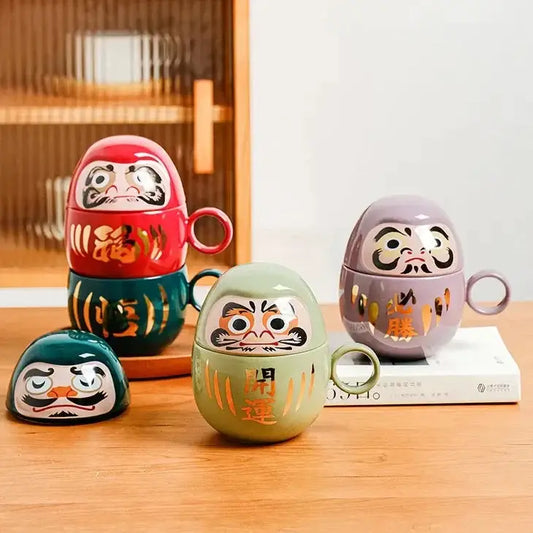
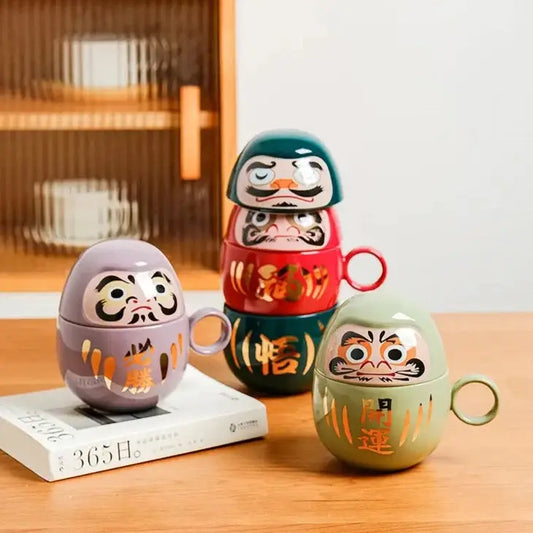
Daruma Creative Tea Cup
Regular price 26$ USDRegular priceUnit price perDaruma Creative Tea Cup
Regular price 26$ USDRegular priceUnit price perDaruma Creative Tea Cup
Regular price 26$ USDRegular priceUnit price per -
Retro Vintage Japanese Cup
Regular price 21$ USDRegular priceUnit price perRetro Vintage Japanese Cup
Regular price 21$ USDRegular priceUnit price perRetro Vintage Japanese Cup
Regular price 21$ USDRegular priceUnit price per -
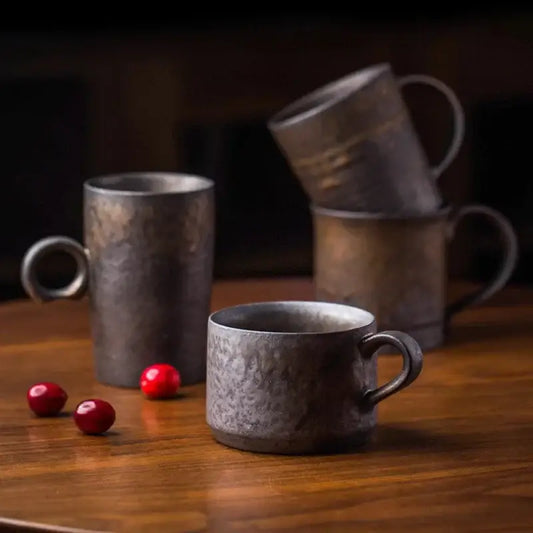
Rustic Style Japanese Mug
Regular price 24$ USDRegular priceUnit price perRustic Style Japanese Mug
Regular price 24$ USDRegular priceUnit price perRustic Style Japanese Mug
Regular price 24$ USDRegular priceUnit price per -
Bamboo Shape Tea Cup
Regular price 24$ USDRegular priceUnit price per -
Wooden Handle Japanese Cup
Regular price 28$ USDRegular priceUnit price perWooden Handle Japanese Cup
Regular price 28$ USDRegular priceUnit price perWooden Handle Japanese Cup
Regular price 28$ USDRegular priceUnit price per -
Sakura Pink Frost Cup with Coaster
Regular price 38$ USDRegular priceUnit price per -
Wooden Handle Tall Fuji Mug
Regular price 48$ USDRegular priceUnit price perWooden Handle Tall Fuji Mug
Regular price 48$ USDRegular priceUnit price perWooden Handle Tall Fuji Mug
Regular price 48$ USDRegular priceUnit price per -
Wooden Handle Fuji Mug
Regular price 48$ USDRegular priceUnit price perWooden Handle Fuji Mug
Regular price 48$ USDRegular priceUnit price perWooden Handle Fuji Mug
Regular price 48$ USDRegular priceUnit price per -
Retro Totoro Tea Cup
Regular price 35$ USDRegular priceUnit price per -
Japanese Sakura Tea Cup
Regular price 17$ USDRegular priceUnit price perJapanese Sakura Tea Cup
Regular price 17$ USDRegular priceUnit price perJapanese Sakura Tea Cup
Regular price 17$ USDRegular priceUnit price per -
Zen Mountain Tea Cup
Regular price 17$ USDRegular priceUnit price perZen Mountain Tea Cup
Regular price 17$ USDRegular priceUnit price perZen Mountain Tea Cup
Regular price 17$ USDRegular priceUnit price per






Sip Serenity: The Essence of the Japanese Tea Cup
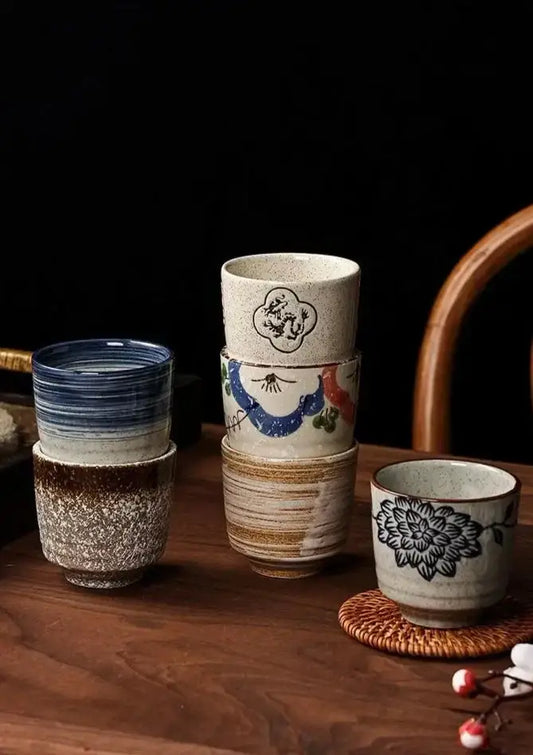
Welcome to the tranquil universe of the Japanese Tea Cup, or yunomi (茶杯), where every sip is an invitation to pause, reflect, and reconnect with tradition. More than a vessel, the Japanese tea cup is a tactile experience, a poetic object shaped by nature, culture, and centuries of tea philosophy. 🍵
Used in daily tea rituals across Japan, yunomi are crafted to heighten the sensory experience of drinking green tea, matcha, hojicha, or genmaicha. Unlike Western tea cups with handles, Japanese cups are meant to be held with both hands, connecting the drinker directly to the warmth and soul of the tea.
Our curated collection of Japanese Tea Cups celebrates the artistry and intention behind each piece. From rustic stoneware to minimalist porcelain and hand-glazed masterpieces, these cups invite you to turn tea time into a cherished ritual. ✨
A Heritage in Your Hands: History and Forms of Japanese Tea Cups
Tea has been a cornerstone of Japanese culture for over a millennium, and with it, the evolution of tea cups. During the Heian period, tea was reserved for the elite and served in imported Chinese ware. By the Edo period, Japanese artisans began creating their own uniquely styled tea cups, emphasizing simplicity, imperfection, and tactile pleasure.
There are two primary types of tea cups in Japan:
| Cup Type | Use & Traits |
|---|---|
| Yunomi | Everyday use; taller, cylindrical, for informal tea drinking |
| Chawan | Wider and deeper; used in matcha tea ceremonies |
Yunomi cups are made in countless regional styles, from the rugged Hagi-yaki and Shigaraki-yaki to the refined Kutani-yaki and Arita-yaki. Each region contributes its own clay, glaze, and spirit to the cup, turning your daily tea into a sensory journey through Japan.
Why Japanese Tea Cups Are Everyday Art
Japanese tea cups bring more than beauty to the table. They embody mindfulness, function, and culture in one modest form. Here's why they stand out:
-
Designed for the Hand: Without handles, the cups encourage a direct connection to the tea's warmth and aroma.
-
Artisan Craftsmanship: Each cup is often hand-thrown or hand-glazed, making no two exactly alike.
-
Seasonal Resonance: Different cups are used for different seasons — lighter, thinner cups in summer; earthy, textured cups in winter.
-
Wabi-Sabi Aesthetic: Celebrating imperfection and transience, many tea cups feature asymmetry, organic shapes, and natural glazes.
-
Daily Mindfulness: Turning tea time into a moment of calm, presence, and gratitude.
A Japanese tea cup doesn’t just hold tea — it holds intention.
How to Choose and Style Your Japanese Tea Cup
Tea cups come in diverse styles to match your taste, mood, and setting. Here’s how to find and style the perfect cup for your ritual:
-
For Everyday Use: Choose a medium-sized yunomi with durable glaze and a comfortable grip. Great for green tea or even herbal blends.
-
For Matcha Lovers: Opt for a chawan with a wide mouth to allow proper whisking. Thicker walls help retain heat.
-
For Display and Gifting: Select artisan-crafted cups with unique glazes, signatures, or boxed sets. Perfect for collectors or cultural gifts.
-
For Zen Vibes: Pick muted, earthy tones with rough textures. These enhance the tea’s natural aesthetic and promote grounding energy.
-
For Minimalist Settings: Clean lines, white porcelain, or matte finishes offer elegance and modern appeal.
| Tea Cup Style | Best For | Pairing Tips |
| Hagi-yaki | Winter, grounding rituals | Pair with dark teas and wood trays |
| Arita-yaki Porcelain | Summer, modern spaces | Combine with white teapots or glass accessories |
| Matcha Chawan | Tea ceremony, mindful mornings | Add bamboo whisk, scoop, and cloth |
| Rustic Stoneware | Nature-inspired decor | Enhance with bonsai, incense, and washi coasters |
| Modern Yunomi | Office or everyday tableware | Match with stainless tray and small snack bowl |
Let your tea cup reflect your intention and aesthetic — subtle, soulful, and serene.
Pairing Japanese Tea Cups with Surroundings and Rituals
Tea cups are best appreciated when integrated into a harmonious setting. Here's how to enrich your tea ritual with mindful pairings:
-
Tea & Teaware: Pair with a kyūsu teapot, tea caddy, or bamboo scoop for a complete set.
-
Trays & Mats: Use wooden, ceramic, or lacquer trays and woven placemats to elevate your presentation.
-
Complementary Decor: Add ikebana flower arrangements, bonsai trees, or incense for a peaceful corner.
-
Lighting & Mood: Soft lighting enhances the visual texture of ceramic and porcelain cups. Try paper lanterns or candles.
-
Snacks & Sweet Pairings: Serve seasonal wagashi (Japanese sweets), fruit slices, or mochi alongside for cultural completeness.
| Element | Enhancement Purpose | Suggestion |
| Kyūsu Teapot | Pours tea with traditional grace | Choose same clay/glaze as your cup |
| Bamboo Tray | Adds contrast and warmth | Use as mobile tea station |
| Shoji Light or Lamp | Creates calming shadows and softness | Best in evening or rainy day settings |
| Incense or Candle | Engages the senses and deepens focus | Pick green tea or sandalwood scents |
| Wagashi Sweets | Balances bitter teas and celebrates seasonality | Try with matcha, sencha, or hojicha |
A tea cup isn't just used — it's lived with. Let it shape your environment as much as your routine.
Cradle Stillness: The Spirit of the Japanese Tea Cup
In the shape of a tea cup lies the essence of Japanese aesthetics: humble beauty, functional grace, and an invitation to be present. Holding one is like holding a moment of calm in your hands.
Whether you use it for morning meditation, afternoon focus, or evening unwinding, the Japanese tea cup turns each cup of tea into a sacred pause. It teaches us that simplicity, when chosen with intention, can be infinitely profound.
Browse our Japanese Tea Cup collection to find your perfect match. From rustic glazes to refined porcelain, from seasonal sets to handcrafted heirlooms, each yunomi or chawan is a small masterpiece ready to enrich your life.
Drink deeply. Hold gently. Let each cup carry you home.
