
-
Burgundy Bow Gothic Lolita Blouse
Regular price 43$ USDRegular priceUnit price per -
Blush Ribbon Harajuku Lace Blouse
Regular price 43$ USDRegular priceUnit price per


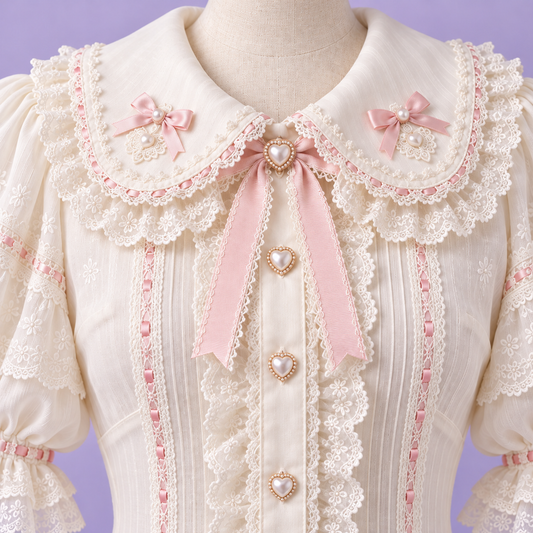
Lolita Blouses: shape the top half of your coordinate
A blouse gives a Lolita coordinate its neckline, sleeve shape, and the first layer of detail beneath a dress or jumper skirt. A high collar can make the outfit feel composed; a ruffled bib can create a romantic focal point; puff sleeves can balance a full skirt; a simple cuff can leave room for statement accessories. The blouse helps set the tone before color, print, and decorative details are considered, which makes it one of the most versatile pieces in a coordinated wardrobe.
Lolita fashion is built through considered combinations. The blouse interacts with the skirt or dress, petticoat volume, headwear, legwear, shoes, and accessories. Its fit and proportions affect how the whole silhouette reads. A blouse that sits neatly at the shoulder can make a layered outfit look intentional, while sleeve volume and collar height influence where the eye travels. Color and texture can connect different pieces or create a deliberate contrast.
This Lolita Blouse collection guide explores collars, sleeves, fabrics, proportions, substyles, layering, fit, and care. It is about blouse styling as a whole, not one particular listing. Use the ideas to plan a Sweet, Gothic, Classic, Punk, or mixed coordinate, then review the measurements and care details for each individual garment before choosing. The best blouse is one that supports your outfit and feels comfortable for the way you plan to wear it.
✦ Start with silhouette, then detail
Look at the blouse shape beside the skirt or dress. A defined collar and fitted shoulder can balance a full skirt; soft sleeves or ruffles can repeat its volume. Choose trim and accessories after the proportions feel right.
Why the blouse matters in Lolita fashion
The blouse is often the visible foundation between the neckline and the waist. In a jumper skirt coordinate, it can frame the straps and bib, add contrast beneath the bodice, and create a clear visual line from collar to skirt. In an outfit centered on a skirt, its sleeves and neckline help balance the volume below. Even when partly covered by a cardigan or jacket, blouse details at the collar and cuffs can add a polished finish.
Different blouse details create different moods. Ruffles and lace may feel romantic or ornate; pintucks and covered buttons can create a more tailored impression; a wide collar or bow can make the outfit feel playful; a high neckline can add structure. None of these details belongs exclusively to one substyle. Color, pattern, and the garments around them determine whether the blouse feels Sweet, Gothic, Classic, or more experimental.
Thinking about the blouse as a structural piece makes coordination easier. Rather than asking only whether it matches the skirt, consider how its shape balances the outfit. Are the sleeves too voluminous beside a broad shoulder detail? Does the collar compete with a necklace or headpiece? Does the blouse create enough contrast beneath a printed dress? These questions help identify what the coordinate needs.
A blouse also supports practical comfort. Sleeve length, closure placement, fabric weight, and neckline depth all affect how it feels during a full day. A beautiful detail matters less if it restricts movement or requires constant adjustment. Consider the setting, climate, and duration alongside appearance so that the complete outfit is enjoyable to wear.

Collar shapes and neckline styling
The collar frames the face and provides a natural place for decorative detail. A rounded collar can soften a coordinate, while a pointed or stand collar may feel more structured. High necklines can create a composed silhouette and offer a visual backdrop for a bow, brooch, or necklace. A lower or open neckline can leave more space for jewelry or a layered collar, depending on the garment and the look you want.
Consider how the blouse collar sits beneath a jumper skirt, vest, jacket, or cardigan. A large collar may spread beyond the garment’s neckline and become a feature; a smaller collar may fit neatly underneath and keep attention on the dress. If the outer layer includes straps, lapels, or a decorative bib, check that the blouse does not bunch where the pieces meet. Trying the combination together is the best way to understand the proportions.
Ruffles, lace edging, and bows can create a focal point near the face. If the blouse already has an ornate collar, choose a headpiece or necklace that supports it rather than crowding it. If the neckline is simple, a bow, brooch, or layered accessory can add the missing detail. A clear focal point helps the coordinate feel intentional even when several decorative pieces are involved.
Neckline details can also connect to the print or theme of the outfit. A ribbon color may repeat a small motif in the skirt; a lace edge can echo cuffs or petticoat trim; a modest collar can balance a bold print. Use one or two repeated elements instead of matching every trim exactly. Slight variations in scale and texture make the outfit feel thoughtfully assembled rather than uniform.
Sleeves, cuffs, and proportion
Sleeves add volume and movement to the upper half of a coordinate. Puff sleeves can balance a full skirt by carrying some visual weight above the waist. More fitted sleeves can create a cleaner line beneath a vest or jacket. Bell or flared cuffs may draw attention to the hands, while gathered wrists create a softer finish. The right sleeve shape depends on both the blouse and the other layers.
Think about sleeve volume in relation to the shoulder and skirt. Broad sleeves may pair well with a substantial skirt silhouette, but they can compete with a capelet, coat, or layered bodice. Narrow sleeves may fit more easily beneath outerwear and allow bracelets or glove details to remain visible. If the blouse is worn under a jumper skirt, check whether the sleeve seam or cuff catches beneath the straps.
Cuffs are small but visible styling points. Lace, buttons, ribbon ties, and ruffles can echo other details in the outfit. If the skirt hem already has several layers of trim, a quieter cuff may help create balance. If the rest of the outfit is simple, a decorative cuff can provide a charming finish. Consider how cuffs appear beside gloves, bracelets, or a bag handle as you move.
Comfort and mobility matter. Raise your arms, bend your elbows, and sit while wearing the blouse. Sleeves that feel fine when standing still may pull at the shoulder or wrist during movement. A cuff should stay secure without pinching, and the sleeve should allow you to carry a bag or adjust accessories easily. Testing the blouse with intended layers can reveal fit issues before an event.
♡ Three blouse moods
Sweet: rounded collar, soft bow, and gentle sleeve volume. Gothic: higher neckline, dark lace, and sharper contrast. Classic: balanced proportions, restrained trim, and polished cuffs. Treat these as starting points, not rules.
Sweet Lolita blouses
Sweet Lolita blouses often use light or vivid colors, decorative collars, soft bows, and playful trim. Ivory, pink, red, mint, lavender, and pastel blue can all support a Sweet coordinate. The blouse may repeat a color from a printed skirt or create a calm area beneath a detailed jumper dress. Ruffles and lace can add charm, but the overall effect depends on how much detail the rest of the outfit already contains.
If the skirt features a strong print, a blouse in a quieter shade can help the pattern remain the focal point. Pick a color from the print or use a neutral tone that gives the eye a pause. If the skirt is solid, a blouse with a decorative bib, collar, or sleeve can bring the coordinate to life. This relationship between patterned and simple pieces is an easy way to control visual density.
Sweet styling can be bold as well as delicate. A bright red bow, darker shoe, or contrasting cardigan can give a pastel outfit more definition. The blouse can carry a stronger accent near the face, with a smaller echo elsewhere. Alternatively, keep the upper half light and let a bag or footwear introduce contrast. Both approaches can feel cohesive when the color has a reason to appear.
When wearing a headband, bonnet, or other statement accessory, check how it relates to the blouse collar. A large bow near the face plus a large collar bow can create a crowded focal area. One can be simplified, shifted in color, or balanced by a quieter neckline. The goal is not to remove charm but to give each detail enough room to register.
Gothic Lolita blouses
Gothic Lolita blouses often lean into darker colors, defined shapes, and layered texture. Black, charcoal, burgundy, deep violet, and ivory can be combined for contrast. Lace, ribbons, pintucks, buttons, and high collars may contribute to the mood, but a dark coordinate does not need every available detail. A single structured blouse with a strong neckline can feel as effective as a heavily embellished one when the rest of the outfit is balanced.
Texture creates dimension in a dark palette. Matte fabric beside lace, a satin bow on a simple collar, or an ivory cuff against black can make the blouse more visible without changing its overall color family. If the dress or skirt is already decorated, a cleaner blouse can give the eye some rest. If the outer garment is plain, a textured bib or lace collar can add interest near the face.
Gothic styling can be romantic, dramatic, or restrained. A soft bow and fine lace may create a gentler mood; crisp contrast and a high neckline can feel more theatrical; a plain dark blouse may create a composed base. Decide which direction you want before choosing accessories. Then repeat one color or finish elsewhere in the coordinate to connect the blouse to the skirt and headwear.
Consider light and setting. Dark fabric details can be difficult to see in a dim room or in photographs. A small contrast at the collar or cuff can preserve definition. If you plan to wear the blouse outdoors at night or in a low-lit venue, check how its details read from a distance as well as up close.

Classic Lolita blouses
Classic Lolita often pairs balanced shapes with vintage-inspired details and a composed palette. Cream, brown, navy, wine, muted green, and soft floral colors can work with a wide range of skirts and jumper dresses. A blouse may use a modest collar, neat buttons, subtle pintucks, or restrained lace. The effect comes from proportion and finish rather than from adding the largest possible amount of decoration.
With a printed skirt, consider selecting a blouse shade that appears in the pattern or choosing a quiet neutral. A solid skirt can support a little more detail around the collar or cuffs. A cardigan or fitted jacket may bring structure, so decide whether the blouse should continue that line or soften it with ruffles. The coordination can be polished without looking overly formal.
Classic outfits benefit from visible transitions. A collar peeking above a neckline, a cuff extending beyond a sleeve, or a ribbon repeating the skirt’s color can connect layers. These small details help the outfit look considered. Keep the scale consistent: delicate trim pairs naturally with subtle accessories, while a more substantial collar may need a stronger counterpart.
Punk, sailor, and mixed-style blouses
Punk Lolita can use contrast and texture to create energy. A striped or tartan accent, dark ribbon, unusual collar, or sharper cuff detail may shift the mood of a blouse. Connect that detail to a skirt print, belt, shoe, or bag. A single contrast can make a coordinate feel bold; several unrelated accents may compete for attention, so decide which one should lead.
Sailor-inspired coordinates may use crisp collars, clean lines, and colors such as navy, white, and red. A structured blouse can provide a neat foundation, while a bow or trim introduces softness. The same collar can look different when paired with a full skirt, fitted vest, or cardigan. Use the shape to support the rest of the outfit rather than treating it as a fixed uniform formula.
Personal coordinates often mix influences. A Sweet print with a dark blouse, a Classic skirt with a bold bow, or a Gothic outfit with a pale collar can all create a distinctive contrast. Substyles are useful for describing a mood, but they do not limit how you combine pieces. Repetition, proportion, and intentional contrast matter more than following a strict checklist.

Color, print, and fabric coordination
Color coordination is less about finding an exact shade and more about creating a visual rhythm. Begin with the skirt or dress, identify its dominant color, and notice one or two smaller tones in the print. The blouse can repeat the dominant shade, pick up a minor accent, or introduce contrast. Cream can soften a dark palette; black can ground a pastel print; burgundy or red can bring warmth to a mostly neutral outfit.
Fabric appearance plays a similar role. Smooth cotton, lace, satin ribbon, and textured trim each catch light differently. Repeating one finish in another place can connect the blouse to the rest of the coordinate. A ribbon may echo a waist bow; lace at the cuff may repeat a skirt edge. Let other textures differ to keep the outfit dimensional rather than making every surface identical.
Print scale matters. A blouse with a bold pattern can compete with a patterned skirt, while a solid blouse can make a complex print easier to read. Mixing patterns can work when they share a color, scale, or visual rhythm. For example, a small repeating blouse motif may sit comfortably beside a larger skirt print if the palette feels connected. If the combination feels busy, reduce the size of one pattern or simplify an accessory.
Color can look different in daylight, indoor lighting, and photographs. Compare the blouse and skirt in the setting where you plan to wear them. Small shade differences are natural. A related color family or repeated trim detail often creates enough continuity without requiring a perfect match.
Color formula: repeat one, contrast one, rest one
Repeat one shade from the skirt, choose one accent for a bow or accessory, and keep another area simple. This helps the blouse connect to the outfit while preserving a clear focal point.
Layer a blouse with jumper skirts and outerwear
A blouse is often worn beneath a jumper skirt, pinafore-style dress, vest, or cardigan. The neckline must sit comfortably within the outer piece, and the sleeves should move without bunching. A large collar can extend beyond a square or rounded neckline, creating a decorative frame. A smaller collar may stay neatly underneath. Neither is inherently better; choose the effect that fits the outfit.
Check where straps and seams meet. If a blouse has bulky ruffles at the shoulder, they may gather beneath narrow straps. A smoother sleeve or shoulder can make layering easier. Similarly, a decorative bow at the throat may sit under a bib and become hidden. Position accessories so they remain visible and do not press uncomfortably beneath the outer garment.
Cardigans and jackets can change how much of the blouse is seen. A cropped layer may reveal the waist and cuffs; a longer one can make the collar the central detail. Think about sleeve lengths together. Cuffs that extend slightly beyond an outer sleeve can look intentional, while too much fabric may feel cumbersome. Try the full combination and adjust the layers before adding final accessories.
Outerwear is useful for weather and can also alter the coordinate’s mood. A tailored jacket may make a blouse feel more Classic; a soft cardigan can lean sweet; a darker coat can add Gothic contrast. The blouse should remain comfortable beneath those layers, especially around the armholes and neckline. Movement tests help prevent pulling and bunching.
Fit, measurements, and comfort
Fit begins with the measurements for the specific blouse. Size labels vary, so check bust, shoulder, sleeve, and garment length measurements where available. Compare them with a blouse you already own that fits well. Pay attention to whether the listed measurements describe the garment itself or the body it is designed to fit. If the blouse includes elastic, ties, or adjustable cuffs, consider how much adjustment those details provide.
Shoulder fit affects the entire garment. A shoulder seam that sits too far inward may pull across the back; one that sits too far outward may change the sleeve shape. Check the armhole and upper sleeve when you move. Raise your arms, reach forward, and sit. The blouse should allow comfortable motion without pulling strongly at the buttons or neckline.
Consider how the blouse feels against the skin and over any base layer. Fabric weight, seams, tags, buttons, and cuffs can all affect comfort. If you plan to wear it for a long event, test the blouse with the exact skirt and outer layers. Heat and crowding can make a fabric feel different after several hours than it did during a quick try-on.
Care requirements influence everyday wear too. Decorative lace, delicate buttons, or special fabrics may require more careful handling. Read the product details before choosing a blouse for a frequent-use outfit. A piece that suits your routine and comfort preferences is easier to style again and again.
Blouse details: bows, lace, buttons, and ruffles
Decorative details give a blouse its character, but they work best when they have a clear relationship to the rest of the coordinate. A bow can repeat the color of a skirt motif; lace can echo the trim on a petticoat; buttons can add a row of visual rhythm. Think about detail placement as well as quantity. A single feature at the collar may be enough to frame the face, while a detailed cuff can balance a simpler neckline.
Ruffles add softness and volume. At the collar they draw attention upward; down the front they create a decorative center line; at the cuffs they highlight movement. If the outfit already includes a heavily decorated skirt and headpiece, select one area for ruffles to lead. If the skirt is plain, additional blouse detail can provide the visual richness that gives the coordinate its identity.
Buttons and closures also affect the look. A neat row can create structure, while hidden closures keep attention on the fabric and trim. Check how the front lies when fastened and whether the garment remains smooth beneath a bodice. A closure should be secure and comfortable; if the fabric pulls or gaps, reconsider fit or layering.
Care and storage for detailed blouses
Follow the care instructions for each garment. Cotton, lace, ribbon, buttons, and decorative finishes may require different treatment. Do not assume every blouse can be machine washed, tumble dried, or ironed at a high temperature. When instructions recommend delicate handling, follow them to protect shape and trim. If an item includes detachable accessories, remove or secure them as directed before cleaning.
After wearing, allow the blouse to air before storing it. Fasten closures so they do not catch on lace or other garments. Use a hanger that supports the shoulders, or fold the blouse carefully if that is more appropriate for its fabric. Avoid pressing decorative areas beneath heavy clothing, and keep light and dark garments separated if color transfer is a concern.
When ironing or steaming is allowed, test a discreet area and follow the label. Protect bows, lace, and textured details from direct heat where needed. Store delicate pieces in a clean, dry place and check occasionally for loose threads or missing buttons. Small repairs are easier when noticed early.
Build the coordinate from the blouse outward
Sometimes a blouse is the best starting point. Begin with its collar or sleeve shape, then choose a skirt or jumper dress that balances those proportions. A detailed blouse can pair with a calmer print; a simple blouse can make room for an ornate skirt or statement headpiece. Use color to connect the pieces and texture to add depth. This approach is especially useful when you want to style an existing wardrobe in new ways.
At other times, the skirt or dress is already chosen. In that case, look for a blouse that supports its neckline and volume. Check the collar against the dress, the sleeve against outerwear, and the color against the print. Then add legwear, shoes, headwear, and accessories. Each choice should strengthen the coordinate’s main idea rather than compete with it.
Take a full-length photo when the outfit is complete. A photograph can make proportions easier to judge than a close mirror view. Check whether the collar is visible, the sleeves feel balanced with the skirt, and the palette looks connected. Adjust one detail at a time. Sometimes changing a bow or cardigan is enough to make the entire look feel more resolved.
Find a blouse that feels like your style
Lolita blouses can be romantic, playful, structured, dark, vintage-inspired, or somewhere between. The collar frames the face, sleeves shape the upper silhouette, and fabric details connect the outfit. Whether you are building a Sweet, Gothic, Classic, Punk, or mixed coordinate, start with proportion and comfort, then refine the colors and decorative accents.
Explore the Lolita Blouse collection as inspiration for assembling a complete outfit. Consider how a blouse will work with skirts, jumper dresses, outerwear, and accessories you already enjoy. Review measurements, fabric information, and care details for each item, since construction can vary. A good blouse does more than match: it helps the whole coordinate feel balanced, wearable, and unmistakably yours.
Make the blouse your starting point
From a crisp collar to a cascade of lace or a single ribbon accent, blouse details can shape the entire mood of a Lolita outfit. Let the silhouette guide your choices, give standout details enough space, and make comfort part of the styling process. When the blouse and the rest of the coordinate work together, even small details feel intentional.
