
-
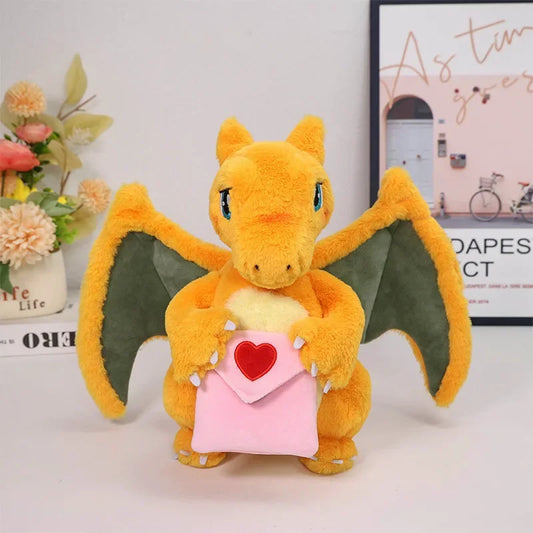
Charizard Valentine's Day Plush
Regular price 35$ USDRegular priceUnit price per -
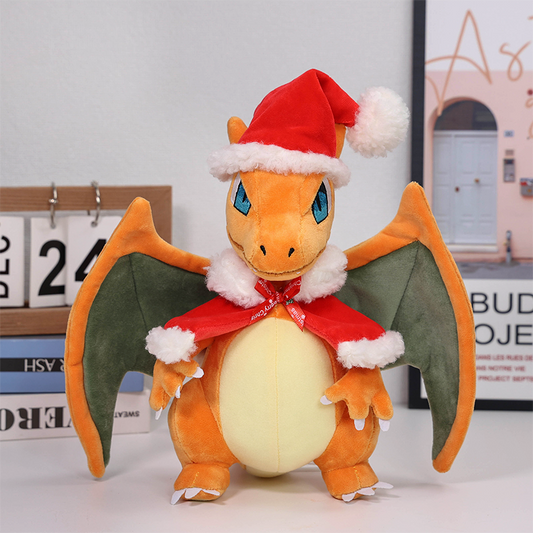
Charizard Christmas Plush
Regular price 38$ USDRegular priceUnit price per -
Clone Charizard Plush
Regular price 35$ USDRegular priceUnit price per -
Classic Charizard Anime Figure
Regular price 21$ USDRegular priceUnit price per -
Mega Charizard X Figure
Regular price 35$ USDRegular priceUnit price per -
Charizard Epic Anime Poster
Regular price From 14$ USDRegular priceUnit price per -
Charizard Traditional Japanese Poster
Regular price From 14$ USDRegular priceUnit price per -
Charizard Eruption Poster
Regular price From 14$ USDRegular priceUnit price per -
Charizard Flying Poster
Regular price From 14$ USDRegular priceUnit price per -
Charizard Japanese Poster
Regular price From 14$ USDRegular priceUnit price per -
Charizard vs Blastoise Battle Poster
Regular price From 14$ USDRegular priceUnit price per -
Ancient Charizard Poster
Regular price From 14$ USDRegular priceUnit price per -
Mega Charizard X Anime Poster
Regular price From 14$ USDRegular priceUnit price per -
Charizard Anime Poster
Regular price From 14$ USDRegular priceUnit price per -
Charizard Ramen Poster
Regular price From 14$ USDRegular priceUnit price per -
Charizard Plush Backpack
Regular price 42$ USDRegular priceUnit price per -
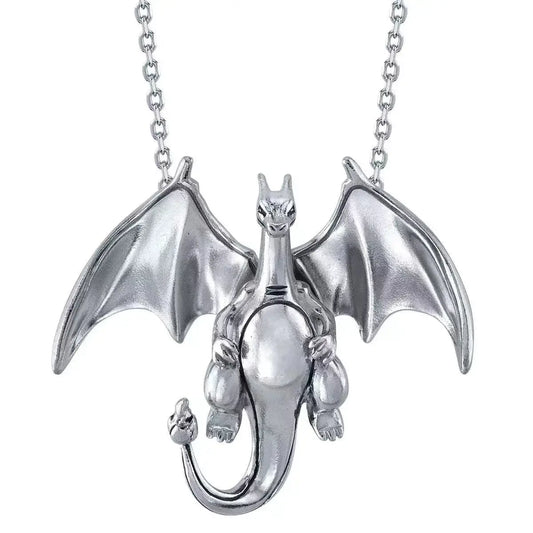
Charizard Pendant Necklace
Regular price 26$ USDRegular priceUnit price per -
Charizard Controller Holder
Regular price 26$ USDRegular priceUnit price per -
Charizard Rayquaza Plush Toy
Regular price 42$ USDRegular priceUnit price per -
Shiny Gigantamax Charizard Plush Toy
Regular price 82$ USDRegular priceUnit price per -
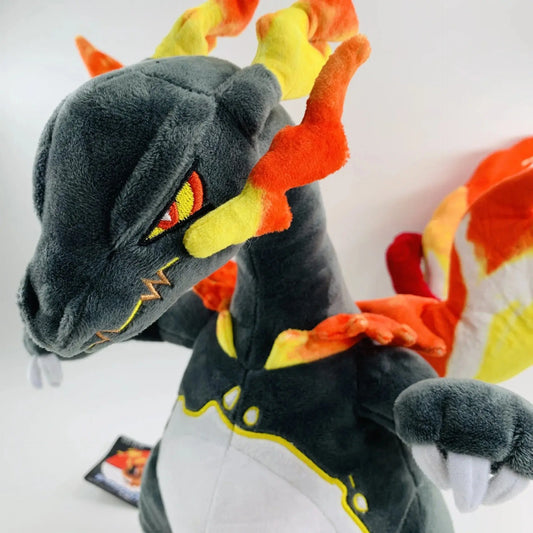
Gigantamax Charizard Plush Toy
Regular price 82$ USDRegular priceUnit price per -
Sleeping Mega Charizard X Plush Toy
Regular price 38$ USDRegular priceUnit price per -
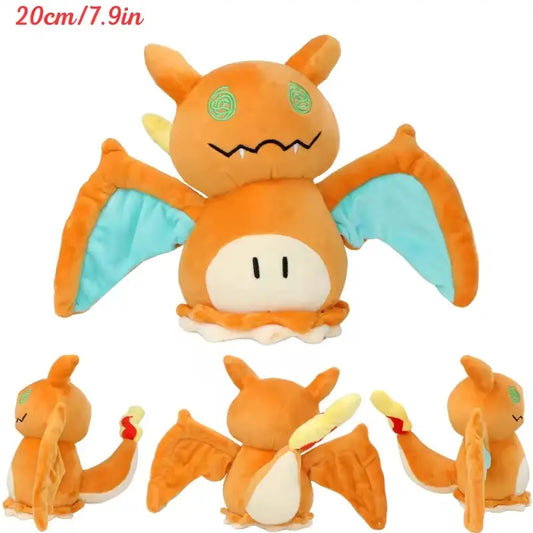
Mimikyu Charizard Plush Toy
Regular price 26$ USDRegular priceUnit price per -
Charizard Tyranitar Fusion Plush
Regular price 38$ USDRegular priceUnit price per -
Blue Aura Charizard iPhone Anime Phone Case
Regular price 17$ USDRegular priceUnit price per -
Striking Charizard Samsung Anime Phone Case
Regular price 17$ USDRegular priceUnit price per -
Charmander To Charizard Evolution Samsung Anime Phone Case
Regular price 17$ USDRegular priceUnit price per -
Charizard Pixeled Samsung Anime Phone Case
Regular price 17$ USDRegular priceUnit price per -
Charizard Dripped Out iPhone Anime Phone Case
Regular price 17$ USDRegular priceUnit price per -
Burning Charizard iPhone Anime Phone Case
Regular price 17$ USDRegular priceUnit price per -
Burning Charizard Samsung Anime Phone Case
Regular price 17$ USDRegular priceUnit price per -
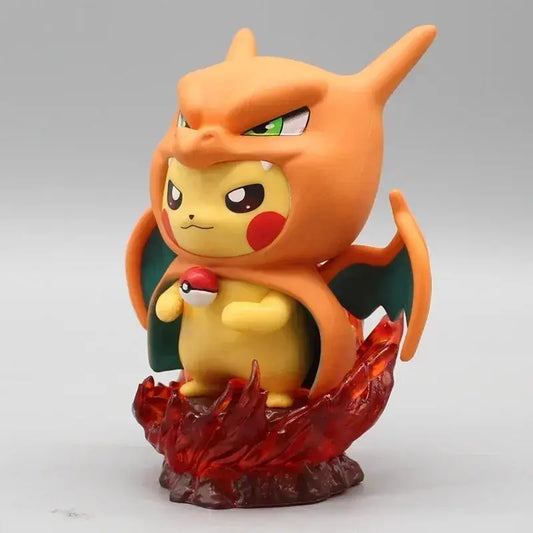
Charizard Pikachu Action Figure
Regular price 35$ USDRegular priceUnit price per -
Shiny Charizard Plush Toy
Regular price 35$ USDRegular priceUnit price per -
Charizard Stuffed Plush Toy
Regular price 35$ USDRegular priceUnit price per -
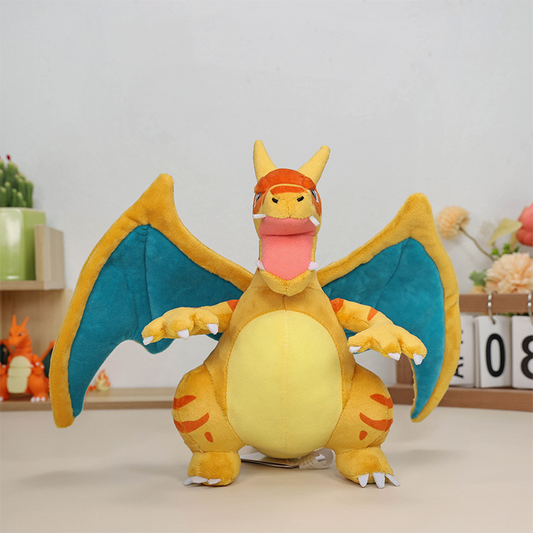
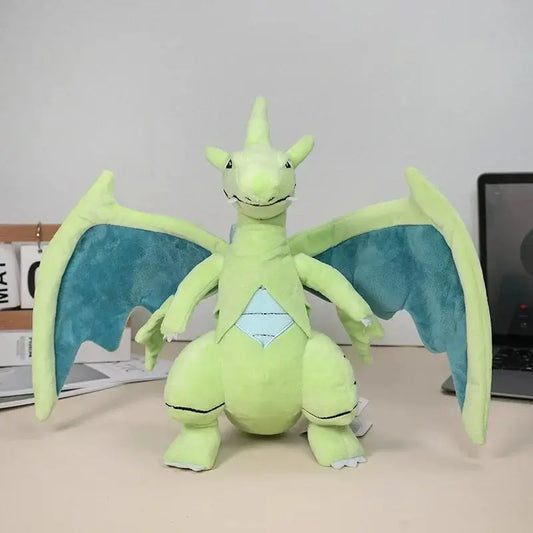
Mega Charizard Plush Toy
Regular price 35$ USDRegular priceUnit price per -
Baby Charizard Plush Toy
Regular price 26$ USDRegular priceUnit price per


















Pokémon character guide
Charizard: The Complete Character Guide
Explore the Flame Pokémon’s evolution, forms, battle traits, and appearances.

Spoiler notice: This guide discusses evolutions, special forms, and Charizard’s anime appearances.
What Is Charizard?
Charizard is the winged, flame-tailed Pokémon that completes the Charmander evolution line. Introduced in the original Pokémon games, it is number 006 in the National Pokédex and a Fire- and Flying-type Pokémon in its standard form. Its orange body, blue-green inner wings, cream belly, and burning tail make it one of the franchise's most recognizable designs.
Charizard at a Glance
Charizard
No. 006
Flame Pokémon
Fire and Flying
Kanto / Generation I
Charmander → Charmeleon → Charizard
5 ft 7 in / 1.7 m
199.5 lb / 90.5 kg
Blaze
Mega X, Mega Y, Gigantamax
The official Pokédex calls Charizard the Flame Pokémon. It appears in games, animation, trading cards, and many other Pokémon stories, with different individual Charizard having different Trainers and experiences. Its dragon-like appearance is striking, but standard Charizard's main-series types are Fire and Flying, not Dragon.

From the choice of Charmander at the beginning of a Kanto adventure to battles involving Mega Evolution and Gigantamax, Charizard offers many ways into the series. This guide explores its evolution, forms, abilities, matchups, and appearances, with game-specific differences explained along the way.
Wings, Flame, and a Familiar Silhouette
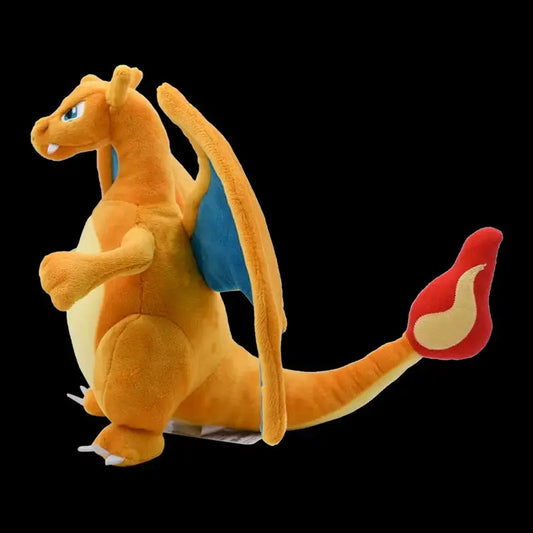
Standard Charizard has an orange body, a long neck, a cream-colored underside, two horns, and broad wings with blue-green inner membranes. Its long tail ends in a visible flame. The shape combines a powerful flying creature with the colors of the Charmander family.
The tail flame connects Charizard visually to its earlier forms. Charmander, Charmeleon, and Charizard each carry one, even as their proportions change and Charizard gains wings. Artists can use that flame to suggest movement or emotion without changing the basic design.
Charizard's shape has inspired interpretations ranging from playful plush to dramatic figures and posters. Shiny Charizard has an alternate color palette, generally appearing dark with red wing interiors in modern depictions. Shiny status is a visual variation and does not by itself guarantee better battle stats.
Special forms change the silhouette further. Mega Charizard X and Y each have distinctive features, while Gigantamax Charizard is shown with enormous wings of fire. Those forms should be distinguished from the standard orange Charizard when comparing artwork or merchandise.
Charizard in Pokémon History
Charizard debuted with the original generation of Pokémon from Kanto. It is the final regular evolution of Charmander, one of the partner Pokémon offered to new Trainers in the original Kanto adventures. That starting choice gives many players a personal memory of raising the entire line.
The Pokémon has appeared across generations, but not every game offers it in the same way. A title might provide Charmander as a partner, introduce the line through an event, allow a transfer, or offer encounters under particular conditions. Availability can change with the game and its updates.
Choosing Charmander in a Kanto adventure is a choice about the whole journey, not just the final form. Early encounters, learned moves, teammates, and the player's own preferences all shape how that partner develops. Some later titles give the line a different role entirely, allowing players to meet it after the adventure has already begun.
Charizard's appearances also reach beyond games. The animated series features several individuals, including Pokémon partnered with Ash, Alain, and Leon. Trading cards have presented the species in a wide range of sets and special mechanics, with each card following the text printed on it.
It is useful to separate a species from an individual story. Ash's Charizard, for example, has a particular history with Ash. It is not automatically the same Charizard as Leon's partner or a player's Pokémon.
Charmander, Charmeleon, and Charizard
Charmander
Charmander is the small Fire-type Pokémon at the beginning of the line. It has an orange body and a flame on its tail. In many main-series games, Charmander begins evolving into Charmeleon at level 16.
Charmeleon
Charmeleon is the middle stage. It keeps the Fire typing and tail flame but has a more angular, reddish appearance, a horn, and stronger-looking claws. In many main-series games, it begins evolving into Charizard at level 36.

Charizard
Charizard gains wings and the Flying type in its standard form, becoming Fire and Flying. Evolution is a regular, lasting change in the game system. Mega Evolution and Gigantamax, when available, are separate transformations and do not add permanent stages to this line.
Evolution rules and progression can vary in spinoff games. Some games allow players to obtain a Charizard directly, while others begin with Charmander or Charmeleon. Check the specific game before relying on a level, location, or event.
The change to Charizard also introduces Flying to a line that begins as pure Fire type. That additional type affects both offensive options and defensive matchups in the core games. It does not replace the earlier stages in a collection: some fans prefer Charmander's compact design, Charmeleon's sharper features, or a display showing all three.
If a favorite move matters to your team, check whether each stage learns it by level, by a teachable item, or through another game-specific method. Different versions offer different tools for teaching and relearning moves. Evolution generally cannot be reversed, so keep a separate Charmander or Charmeleon if you want to retain that stage.
Standard, Mega X, Mega Y, and Gigantamax
Standard Charizard
Standard Charizard is Fire and Flying in the main series. Its familiar orange form has blue-green inner wings and a tail flame. It can be strong in both casual adventures and competitive formats, but its usefulness depends on the game, moves, and team around it.
Mega Charizard X
Mega Charizard X changes to Fire and Dragon. It has a dark body and blue flames, creating a dramatically different appearance from the regular form. In main-series games using the traditional held-item system, Charizardite X is associated with this Mega Evolution.
Mega Charizard Y
Mega Charizard Y keeps the Fire and Flying combination. Its wings and horns take on a more elaborate shape, and it is associated with Charizardite Y in games using the traditional Mega Stone system. In main-series games with Abilities, its Drought can bring harsh sunlight into battle.

Gigantamax Charizard
Gigantamax Charizard has towering wings of flame. In Pokémon Sword and Pokémon Shield, eligible Gigantamax Charizard can use G-Max Wildfire, a Fire-type G-Max Move that deals damage and continues to damage non-Fire-type opponents for four turns under those game rules.
Mega Evolution and Gigantamax use different mechanics. Pokémon GO also uses its own Mega Energy system. A game can include Charizard without supporting every form, so check the title and current format before planning a team around one.
The two Mega forms are an especially useful example of why appearance and typing need separate attention. Mega Charizard X's Fire and Dragon combination has a different set of strengths and weaknesses from the Fire and Flying combination of Mega Charizard Y. Neither form should be judged solely by color, and the temporary transformation does not make either one a new permanent evolution.
In games with the usual Ability system, Tough Claws supports Mega Charizard X's contact moves, while Drought gives Mega Charizard Y a weather-setting role. These are different approaches to team building. A player should also confirm that the form, held item, and chosen moves are legal in the event or format they intend to play.
Gigantamax belongs to the Dynamax system in Sword and Shield. Its signature move and large-scale visual effects are governed by those games' battle rules, including limits on when the mechanic can be used. The presence of a Gigantamax design on merchandise does not imply that the same form is obtainable in every Pokémon game.
The Flame Pokémon and Its Pokédex
Official Pokédex entries describe Charizard in terms of its flight and fire. Its standard-form profile lists a height of 5 feet 7 inches and a weight of 199.5 pounds, approximately 1.7 meters and 90.5 kilograms. Special forms have their own descriptions and measurements.
Pokédex text often uses dramatic language to create a sense of scale and personality. Different versions can focus on different details, from its powerful wings to the heat of its flames. Those entries are fictional descriptions of a species, not a single continuous story about one individual.
Charizard's tail flame is a memorable feature across the evolution line. In the anime, the flame can be important to a particular story, especially in Charmander's early appearance with Ash. The interpretation of an event belongs to that episode and should not be treated as a universal rule for every game mechanic.
Different Charizard can be proud, determined, playful, or loyal depending on their story and Trainer. That range helps the species work as both a formidable opponent and a longtime companion.
Blaze, Solar Power, and Battle Strengths
The official Pokédex lists Blaze for standard Charizard. In many main-series games, Blaze strengthens Fire-type moves when the Pokémon's HP is low. Charizard can also have Solar Power as a Hidden Ability in games where that Ability is available; its effect depends on the game's rules.

Standard Charizard is often used as an offensive Pokémon, with Speed and Special Attack supporting attacks such as Flamethrower. Individual stats, moves, held items, teammates, and game mechanics all affect how it performs. A Pokémon's species alone does not determine the outcome of a battle.
Charizard's Mega forms can change the way a team is built. Mega Charizard X gains Dragon typing and is associated with Tough Claws in main-series games with Abilities. Mega Charizard Y's Drought sets sunlight in those games. The same Ability names can work differently in a spinoff.
Sunlight can support a Fire-focused strategy, but weather also affects the other Pokémon on the field. When considering Solar Power or Drought, look at the rest of the team, the game-specific effects, and how long the weather lasts. A useful partner can take advantage of those conditions while covering an opponent that threatens Charizard.
Neither form is automatically the best choice in every situation. Consider the available moves, opposing team, format rules, and whether Mega Evolution is supported. The answer can change between a casual playthrough, a raid, and a competitive event.
Weaknesses, Resistances, and Type Changes
Under the modern main-series type chart, standard Fire- and Flying-type Charizard is weak to Rock, Water, and Electric moves. Rock is a particularly important threat because both Fire and Flying are weak to it, giving Rock-type attacks a four-times type multiplier under ordinary conditions.

Standard Flying typing normally grants immunity to Ground-type attacks in the main series. Items, moves, Abilities, or field effects can change an interaction, so this is a starting point rather than a guarantee in every battle. Charizard also resists several types, including Grass and Bug under the ordinary modern chart.
Mega Charizard X changes from Fire and Flying to Fire and Dragon. That changes its type matchups, including removing its ordinary Flying-type immunity to Ground. Mega Charizard Y keeps Fire and Flying, so it retains the standard form's basic type relationship unless another effect changes it.
For example, a Rock-type attack is normally four-times effective against Mega Charizard Y but two-times effective against Mega Charizard X under the modern main-series chart. Ground is normally super effective against X, while Flying typing makes Y immune to Ground under ordinary conditions. Individual battle effects can alter those interactions.
A move's type matters independently of the Pokémon using it. A non-Rock Pokémon can still carry a Rock-type move. Pokémon GO and the Trading Card Game use different systems, so their damage calculations should be checked separately.
Entry hazards deserve attention in formats that include them. In standard main-series rules, Stealth Rock's damage depends on the entering Pokémon's Rock-type effectiveness, which makes it particularly costly for ordinary Charizard. Items, removal moves, and other effects can change the result, so check the available tools in the format rather than assuming a single answer works everywhere.
Flamethrower, Fire Blast, and More
Flamethrower is a well-known Fire-type special attack associated with Charizard. Fire Blast is another powerful Fire-type option in many games, with its own accuracy and power tradeoff. Move access and exact effects can vary by title.
Charizard can also have Flying-type and other coverage moves, depending on the game. A move outside its own types can help against an opponent that resists Fire, while a support move may help a team in another way. The best set depends on the adventure or format.
In Pokémon Sword and Shield, Gigantamax Charizard can turn an appropriate Fire-type attack into G-Max Wildfire. That move belongs to the Gigantamax system and should not be confused with a move every Charizard can use in every game.
A good move list begins with a clear role. Consider whether Charizard needs reliable damage, coverage against a particular threat, or support from its teammates. Speed control, entry hazards, weather, and defensive partners can matter as much as a single powerful attack.
Moves also differ by damage category. A special move uses different attacking and defensive stats from a physical move, while a status move can alter the conditions of a battle without dealing direct damage. Compare accuracy, power, added effects, and the available number of uses instead of looking only at the largest damage number.
An opponent's team can influence when Charizard should enter the field. A safe opportunity may come after an ally switches out or prevents a threat from attacking. If an opposing Pokémon is likely to carry a Rock-type move, even a favorable-looking type matchup can become risky. These decisions depend on the actual game and battle format.
Charizard in the Anime and Games
Ash's Charizard
Ash first meets his future Charizard as an abandoned Charmander. It later evolves through Charmeleon into Charizard. Their relationship is not immediately smooth: Charizard can be stubborn, and Ash has to earn its cooperation and trust over time.
Ash eventually leaves Charizard at Charicific Valley for training. The two reunite later, and Charizard takes part in important battles, including Ash's Johto League match against Gary's Blastoise. Their history is a story of patience and partnership as well as strength.
Their bond has a longer arc than a single victory. Ash cares for Charmander when it is vulnerable, struggles to communicate with Charizard after evolution, and later recognizes that training elsewhere can help his partner grow. Returning to help Ash gives that time apart a purpose in their shared story.
Alain and Leon
Alain's Charizard is known for Mega Evolving into Mega Charizard X in the animated series. Leon also has a Charizard partner and is associated with Gigantamax Charizard in Galar. These are separate Pokémon with different Trainers, journeys, and battle moments.
Video games and spinoffs
Charizard appears in many main-series titles and spinoffs, but its availability and mechanics differ. In Pokémon UNITE, it develops from Charmander during a match under that game's progression rules. Pokémon GO has its own events, evolution resources, and Mega Evolution system.
Past events do not guarantee current availability. For a specific game, check the current encounter information and rules before planning how to obtain a Charizard or one of its special forms.
The same caution applies to Pokémon GO raids and limited events. An official announcement describes an opportunity at a particular time; it does not promise that the same encounter is currently active. Pokémon UNITE uses match-specific levels, while core games have their own evolution and move systems. Treat each game's information as a separate guide.
Charizard in the Pokémon Trading Card Game
Charizard has appeared on many Pokémon Trading Card Game cards, from regular evolution cards to ex, VMAX, and other special versions. A standard Stage 2 Charizard card generally evolves from Charmeleon, but special cards can have different printed rules.
The type printed on a card may differ from Charizard's Fire and Flying video-game typing. Pokémon TCG uses its own Energy types, weaknesses, resistance rules, and card mechanics. The card's text and the rules of its format determine how it works.
Collectors may choose a card for its artwork, illustrator, set, language, or personal memories. Value depends on the exact printing, condition, authenticity, and market. A general species guide cannot establish the value of a particular card.
The official Pokémon card database is useful for identifying a card's set, number, and printed text. For a purchase or sale, compare the same printing and condition with recent relevant transactions rather than assuming every Charizard card has the same price.
Special card names can be easy to confuse. A Charizard ex, a Charizard VMAX, and a Mega Charizard card may use different evolution and prize rules depending on the card and era. A player should read the exact card and the current rulebook, while a collector should also check the set symbol, card number, language, and physical condition.
Why Fans Enjoy Charizard
For many fans, Charizard represents a journey from a small Charmander to a fully evolved partner. The progression is easy to follow, and each stage keeps a recognizable flame while developing a distinct outline.
Its design can feel adventurous, powerful, or playful depending on the artwork. That flexibility makes Charizard a natural subject for animation, toys, apparel, and illustrations. Different forms add variety without requiring a fan to prefer one interpretation.
Players may remember a favorite move or battle, while viewers may connect with Ash's evolving partnership or Alain's Mega Charizard X. Collectors may come to the character through a card or figure. Each is a different route to the same familiar Pokémon.
The collection reflects those different interests. A plush can emphasize the rounder, friendly side of the design, while a figure or poster may focus on flight and flame. Standard Charizard, Mega forms, and stylized interpretations are not interchangeable; check the product images and descriptions to choose the version that suits your collection.
Explore the Charizard Collection
The Charizard collection gathers items inspired by the Flame Pokémon and its different appearances. Check each listing for current materials, dimensions, included items, options, and availability.
Browse Charizard plush, Charizard figures, Charizard keychains, and Charizard posters. Designs may feature standard Charizard, a special form, or another interpretation, so product photos are the best guide to the item offered.
Charizard FAQ
Quick answers about its evolution, forms, types, and appearances.
What is Charizard?
Charizard is the final regular evolution of Charmander in the Pokémon series. Its standard form is Fire and Flying type, with an orange body, broad wings, and a flame at the tip of its tail.
What is Charizard's Pokédex number?
Charizard is number 006 in the National Pokédex. Charmander is number 004 and Charmeleon is number 005; regional Pokédex numbers can differ between games.
What type is Charizard?
Standard Charizard is Fire and Flying type in the main-series games. Mega Charizard X changes to Fire and Dragon, while Mega Charizard Y keeps the Fire and Flying combination.
Is Charizard a Dragon-type Pokémon?
Standard Charizard is not Dragon type in the main-series games, despite its dragon-like appearance. Mega Charizard X is Fire and Dragon, while Mega Charizard Y remains Fire and Flying.
What generation introduced Charizard?
Charizard was introduced in Generation I as part of the original Kanto Pokémon. Its first-stage form, Charmander, is one of the partner choices offered to new Trainers in the original Kanto adventure.
What is Charizard's Pokédex category?
The official Pokédex calls Charizard the Flame Pokémon. Its category is a descriptive label, separate from its Fire and Flying battle types and National Pokédex number.
How tall and heavy is Charizard?
The standard form is listed at 5 feet 7 inches and 199.5 pounds, approximately 1.7 meters and 90.5 kilograms. Special forms have their own official measurements.
What does Charizard look like?
Standard Charizard has an orange body, cream underside, two horns, broad wings with blue-green inner membranes, and a long tail ending in flame. Its Mega and Gigantamax forms have different features.
What color is Shiny Charizard?
In modern depictions, standard Shiny Charizard generally has a dark body and red wing interiors. Shiny coloring is a visual variation and does not automatically make its battle stats better.
Is Shiny Charizard the same as Mega Charizard X?
No. Shiny Charizard is an alternate color of standard Charizard. Mega Charizard X is a separate temporary Mega-Evolved form with its own design, typing, and transformation requirements.
What Pokémon evolves into Charizard?
Charmeleon evolves into Charizard. Charmeleon itself evolves from Charmander, making Charizard the third and final regular stage of this familiar Kanto evolution line.
What is Charizard's evolution line?
The line is Charmander, then Charmeleon, then Charizard. Mega Charizard X, Mega Charizard Y, and Gigantamax Charizard are special forms or transformations under separate game mechanics.
When does Charmander evolve?
In many main-series games, Charmander begins evolving into Charmeleon at level 16. Pokémon spinoffs can use different progression systems, so check the rules of the specific game.
When does Charmeleon evolve into Charizard?
In many main-series games, Charmeleon begins evolving into Charizard at level 36. An individual game or spinoff may use a different progression system or provide Charizard through another route.
Can you catch Charizard directly?
Some games and events let players encounter or obtain Charizard directly, while others make evolving Charmander or Charmeleon the usual route. Locations and event availability depend on the title.
Does Charizard evolve into Mega Charizard permanently?
No. Mega Evolution is a temporary transformation in games that support it. Charizard remains the same individual Pokémon and returns from its Mega form according to that game's rules.
What is Mega Charizard X?
Mega Charizard X is a Mega-Evolved form with a dark body and blue flames. It changes Charizard's typing to Fire and Dragon in games that use its standard Mega Evolution mechanics.
What is Mega Charizard Y?
Mega Charizard Y is a Mega-Evolved form with a different wing and horn design. It keeps Charizard's Fire and Flying typing and is associated with the Drought Ability in main-series games with Abilities.
How do Mega Charizard X and Y differ?
Mega Charizard X is Fire and Dragon, while Mega Charizard Y is Fire and Flying. Their appearances and Abilities differ, and the method for choosing a form depends on the game.
What is Charizardite X?
Charizardite X is the Mega Stone associated with Mega Charizard X in main-series games that use the traditional held-item Mega Evolution system. The Trainer also needs the appropriate Mega Evolution equipment.
What is Charizardite Y?
Charizardite Y is the Mega Stone associated with Mega Charizard Y in games using the traditional Mega Stone system. Other games can use different resources or rules to enable Mega Evolution.
What is Gigantamax Charizard?
Gigantamax Charizard is a special form with giant wings of fire. It uses Gigantamax mechanics in supported games and is separate from the Mega Charizard X and Y transformations.
What is G-Max Wildfire?
In Pokémon Sword and Shield, G-Max Wildfire is Gigantamax Charizard's Fire-type G-Max Move. It deals damage and continues to damage opposing non-Fire-type Pokémon for four turns under those game rules.
Can every Charizard Gigantamax?
In Pokémon Sword and Shield, Gigantamax is a special capability rather than the default state of every Charizard. How it is obtained, and whether it is available, depends on the game.
Is Gigantamax Charizard a Mega Evolution?
No. Gigantamax and Mega Evolution are separate mechanics with different appearances and requirements. A Pokémon game that includes Charizard does not necessarily support both transformations.
What are Charizard's weaknesses?
Under the standard modern main-series type chart, regular Charizard is weak to Rock, Water, and Electric moves. Rock attacks are especially threatening because both Fire and Flying are weak to Rock.
Why is Charizard four-times weak to Rock?
Fire and Flying are each weak to Rock in the modern main-series type chart. Their multipliers combine, so a standard Rock-type attack normally deals four-times type-effective damage to regular Charizard.
Is Charizard weak to Water?
Yes. Standard Fire- and Flying-type Charizard is weak to Water moves under ordinary modern main-series type rules. Mega Charizard X has a different Fire and Dragon combination, so its matchup changes.
Is Charizard weak to Electric?
Yes. Electric-type moves are super effective against standard Charizard under the modern main-series chart because of its Flying type. Mega Charizard X changes type, so it has a different interaction.
Is Charizard immune to Ground?
Standard Charizard is normally immune to Ground-type attacks in main-series games because it is Flying type. Certain moves, items, or other effects can change this interaction, and Mega Charizard X is different.
What types resist Charizard's attacks?
The answer depends on the move, not just Charizard's species. Fire-type attacks are less effective against some types, and an opponent may resist or be immune to another move Charizard carries.
What Ability does Charizard have?
The official Pokédex lists Blaze for standard Charizard. In games where Hidden Abilities are available, some Charizard can also have Solar Power; the exact effect and availability depend on the title.
What does Blaze do?
In many main-series games, Blaze strengthens a Pokémon's Fire-type moves when its HP is low. The way an Ability works in a spinoff can differ, so check the game being played.
What is Charizard's Hidden Ability?
Solar Power is Charizard's Hidden Ability in main-series games where it is available. Its interaction with sunlight and its availability can vary by game, so check the Pokémon's summary and title-specific rules.
What Ability does Mega Charizard X have?
In main-series games that use Abilities, Mega Charizard X is associated with Tough Claws. Effects and availability may differ in other Pokémon games, including spinoffs with their own battle systems.
What Ability does Mega Charizard Y have?
In main-series games with Abilities, Mega Charizard Y is associated with Drought, which brings harsh sunlight into battle. Weather duration and interactions follow the rules of the particular game and format.
Can Charizard learn Flamethrower?
Yes. Charizard can learn Flamethrower in many Pokémon games. The method of obtaining the move, its availability, and the best time to use it depend on the title.
Can Charizard learn Fire Blast?
Charizard can learn Fire Blast in many games. It offers a different power and accuracy tradeoff from Flamethrower, but players should verify the move list for their specific game.
Is Charizard good in competitive battles?
Charizard has appeared in competitive play, including teams built around Mega or Gigantamax forms. Its usefulness depends on current rules, available moves and items, teammates, and the opponents in a given format.
How do I build a team around Charizard?
Decide which role and form you want, then consider its Rock, Water, and Electric matchups in the standard form. Teammates, weather, entry hazards, and the rules of the game all affect the final choice.
Can Charizard fly?
Yes. Standard Charizard has wings and the Flying type in the main-series games. Whether a player can use it for a particular travel feature depends on that game's mechanics.
Why does Charizard have a tail flame?
The tail flame is a defining visual feature shared across the Charmander evolution line. Stories and Pokédex descriptions use it to convey the species' fiery identity and, in some contexts, its condition.
Who is Ash's Charizard?
Ash's Charizard began as a Charmander that had been abandoned by its former Trainer. It evolved through Charmeleon, developed a strong personality, and eventually became one of Ash's trusted partners.
Did Ash's Charizard always obey him?
No. After evolving, it is often stubborn and does not always cooperate with Ash. Their relationship changes over time as they face challenges together and build trust.
Why did Ash leave Charizard at Charicific Valley?
Ash lets Charizard stay at the valley so it can train among other Charizard. They reunite later, showing that the training arrangement does not erase their bond.
Does Ash's Charizard return?
Yes. Ash and Charizard reunite after the period of training at Charicific Valley, and Charizard takes part in later battles. Their reunion is part of the continuing animated story.
Who owns Mega Charizard X in the anime?
Alain partners with a Charizard that can Mega Evolve into Mega Charizard X. Other Trainers can have their own Charizard, so Alain's partner should be treated as a separate individual from Ash's.
Who is Leon's Charizard?
Charizard is Leon's partner in Galar, appearing with him in Pokémon Sword and Shield and related animation. It is a different individual from Ash's Charizard and Alain's Mega Charizard X.
Is Charizard in Pokémon GO?
Yes. Pokémon GO features Charizard and its own evolution, raid, event, and Mega Evolution systems. Availability can change, so consult the game's current information for encounters and forms.
Is Charizard in Pokémon UNITE?
Yes. Pokémon UNITE features Charizard, with Charmander and Charmeleon appearing during its match progression. The game's levels, abilities, and battle mechanics differ from main-series adventures.
Are there Charizard Pokémon cards?
Yes. Charizard appears in many Pokémon Trading Card Game sets and card styles. Each printing has its own attacks, Energy costs, weaknesses, and rules, so check the exact card.
Is every Charizard card a Stage 2 card?
Regular Charizard evolution cards are generally Stage 2 cards that evolve from Charmeleon, but special versions can use different mechanics. The printed card and current format rules determine how it is played.
Do Charizard card weaknesses match the games?
Not necessarily. The Pokémon Trading Card Game uses the weakness and resistance printed on each card. Its Energy types and battle rules do not directly copy every main-series video-game interaction.
How much is a Charizard card worth?
Value depends on the exact printing, set, language, authenticity, condition, and current market. Compare relevant recent sales of the same card before deciding what a particular copy is worth.
Where can I find Charizard merchandise?
The collection includes Charizard-inspired products, with links to plush, figures, keychains, and posters. Check each listing for the design, form, materials, dimensions, included items, and current availability.
Sources and Further Reading
Explore Pokémon profiles, game guides, and official episode details.
- Pokémon Pokédex: Charizard
- Bulbapedia: Charmander evolution information
- Pokémon: Mega Evolution in Pokémon GO
- Pokémon Legends: Z-A Mega Evolution
- Pokémon Sword and Shield: Gigantamax Charizard
- Pokémon: Ash, Charmander, and Charicific Valley
- Pokémon Sword and Shield: Leon and Charizard
- Pokémon UNITE: Charizard
- Pokémon Trading Card Game: Charizard ex strategy
