

Kokedama
Kokedama is a type of traditional Japanese gardening technique that has gained popularity in recent years. It is a form of bonsai that involves the creation of moss balls, which are then used as a base for growing plants. Kokedama has its roots in Japanese mythology and is believed to have been developed during the Edo period (1603-1868).
What is Kokedama?
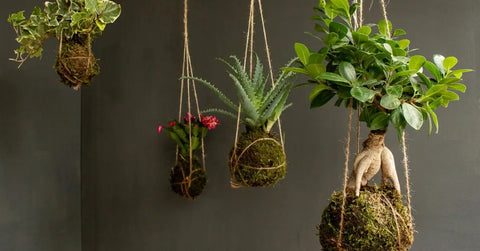
Kokedama is a form of bonsai where the roots of a plant are wrapped in a ball of soil and moss, then held together by twine or string. The moss ball is then hung or placed on a surface, creating a beautiful and unique display of greenery. The name "Kokedama" is derived from the Japanese words for "moss" (koke) and "ball" (dama).
Kokedama in Japanese Mythology
Kokedama has a deep connection to Japanese mythology. In ancient times, it was believed that all things had a spirit, including plants. The art of Kokedama was developed as a way to honor and connect with the spirits of plants, as well as to create a natural and harmonious environment.
Kokedama was also used in Japanese tea ceremonies as a way to bring the natural world indoors. During the ceremony, guests would sit around a low table surrounded by Kokedama, creating a serene and peaceful atmosphere.
Creating Kokedama
Creating a Kokedama is a simple and rewarding process. Here are the steps to create your own Kokedama:
- Choose a plant: Any small plant with a compact root system will work for Kokedama.
- Prepare the soil: Mix equal parts of peat moss, bonsai soil, and clay in a bowl. Add water and mix until the soil mixture is damp.
- Prepare the moss: Soak a large handful of sphagnum moss in water until it is fully saturated.
- Combine the soil and moss: Take a handful of the soil mixture and squeeze it to remove any excess water. Place the plant in the center of the soil and wrap the soil around the roots.
- Wrap with moss: Squeeze the soaked sphagnum moss to remove any excess water, then wrap it around the soil ball, making sure to cover it completely.
- Wrap with twine: Wrap twine around the moss ball several times, making sure to tie it tightly. Leave enough twine at the top to create a loop for hanging.
- Display your Kokedama: Hang your Kokedama in a well-lit area or place it on a surface. Water your Kokedama by soaking it in water for 5-10 minutes, then allowing it to drain completely.
Kokedama Variations
While the traditional Kokedama involves using moss as the outer layer, there are several variations of Kokedama that use different materials. Here are a few variations:
- String garden: Instead of using moss, a string garden involves wrapping the plant's roots in string or twine, creating a unique and modern display.
- Air plant Kokedama: Air plants are ideal for creating Kokedama because they require no soil. The root system can be wrapped in moss or string, creating a unique display.
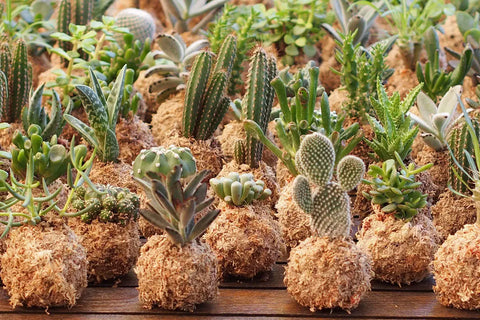
- Succulent Kokedama: Succulents are perfect for Kokedama because they have shallow roots. The moss or string ball can be planted in a container, making it an excellent option for indoor gardening.
Benefits of Kokedama
Kokedama has several benefits, including:
- Easy to care for: Kokedama requires little maintenance, making it ideal for people who don't have a lot of time for gardening.
- Space-saving: Kokedama is ideal for small spaces, as it can be hung from a hook or displayed on a small surface.
- Aesthetic appeal: Kokedama adds a touch of natural beauty to any room or outdoor space.
- Sustainable: Kokedama is a sustainable gardening technique because it uses less soil and creates less waste than traditional gardening.
Conclusion
Kokedama is a unique and beautiful way to incorporate nature into your home or garden. With its roots in Japanese mythology, it is a way to connect with the natural world and honor the spirits of plants. Creating Kokedama is a simple and rewarding process that can add a touch of natural beauty to any space. Give it a try and see how this traditional Japanese gardening technique can enhance your surroundings.
